Agriculture has always evolved through innovation. New farming methods, improved crop varieties, advanced technologies, and sustainable practices have helped increase productivity and improve food security around the world. Behind many of these developments stands an important driver of progress: universities.
Universities play a vital role in generating new knowledge and transforming research into practical solutions for farmers and agricultural businesses. Through scientific studies, experimentation, and collaboration with industry, higher education institutions contribute directly to the modernization of agriculture.
Research helps address many of the challenges facing the agricultural sector today. Climate change, resource scarcity, food security, and digital transformation all require innovative approaches and evidence-based solutions. Universities provide the expertise and infrastructure needed to explore these complex issues and develop new technologies and practices.
However, research has the greatest impact when it reaches the people who can apply it. This is why strong links between universities, farmers, businesses, and policymakers are essential. Collaboration helps ensure that research responds to real-world needs and that innovative solutions are effectively transferred into practice.
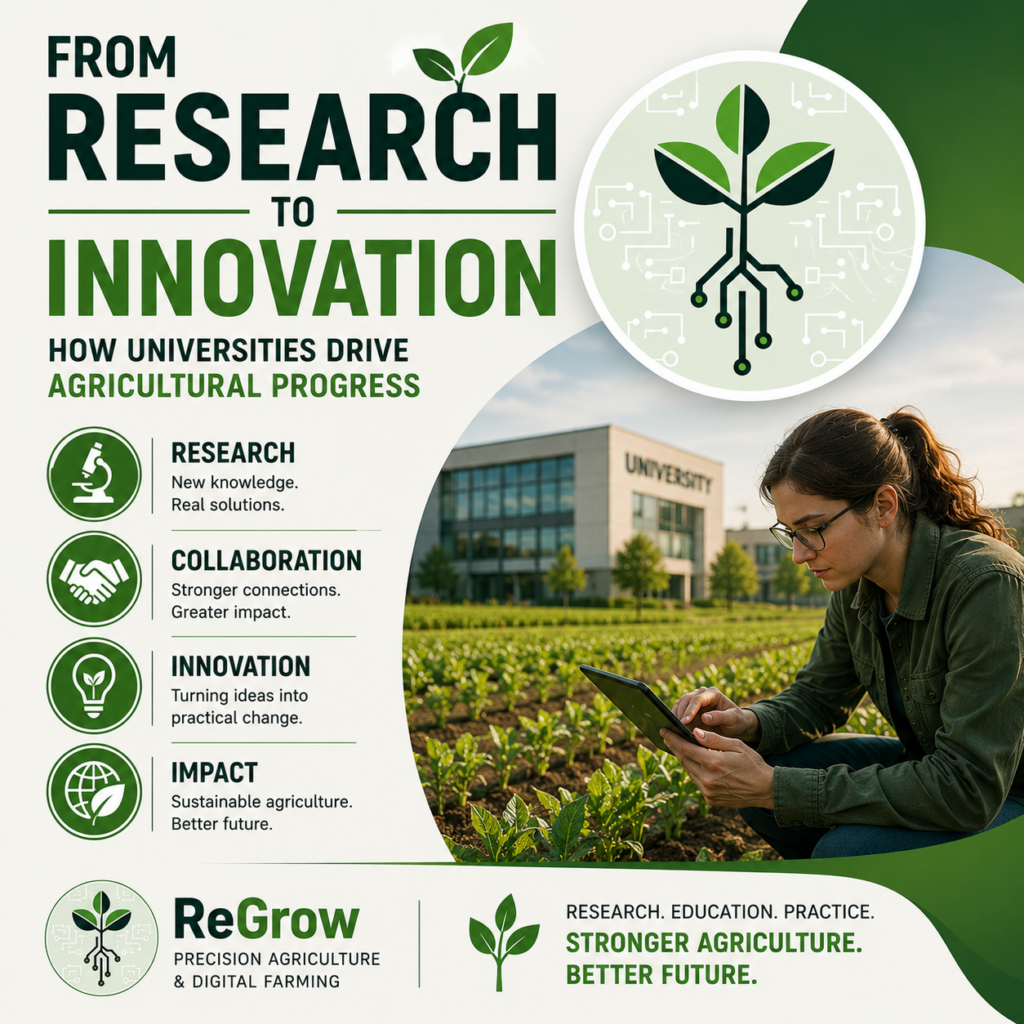
The ReGrow project places universities at the centre of agricultural transformation. By bringing together higher education institutions from Georgia, Ukraine, Greece, and Germany, the project promotes international cooperation, knowledge exchange, and innovation in agricultural education.
The new MSc programme in Precision Agriculture and Digital Farming will expose students to modern technologies, research methods, and practical applications. Through this approach, future agricultural professionals will be better equipped to support innovation and sustainable development within the sector.
Universities are more than places of learning. They are engines of innovation that help shape the future of agriculture. By connecting research, education, and practice, they contribute to stronger rural communities, more competitive agricultural businesses, and a more sustainable food system.