Agriculture is facing a turning point. Across Europe and neighboring regions, farmers and food producers are already experiencing the effects of climate change, soil degradation, water scarcity, and biodiversity loss. These pressures are no longer abstract environmental concerns – they directly influence yields, production costs, rural livelihoods, and food security.
The European Green Deal responds to these challenges with a long-term vision for a climate-neutral, resource-efficient, and inclusive economy. Agriculture is central to this vision. As both a user of natural resources and a steward of land, the sector plays a decisive role in shaping environmental outcomes and societal well-being.
For agriculture, the Green Deal promotes a transition toward more sustainable and climate-smart practices. This includes improving soil health, reducing greenhouse gas emissions, protecting ecosystems, and using water, fertilizers, and energy more efficiently. These goals are not about limiting agricultural productivity – they are about securing it for the future.
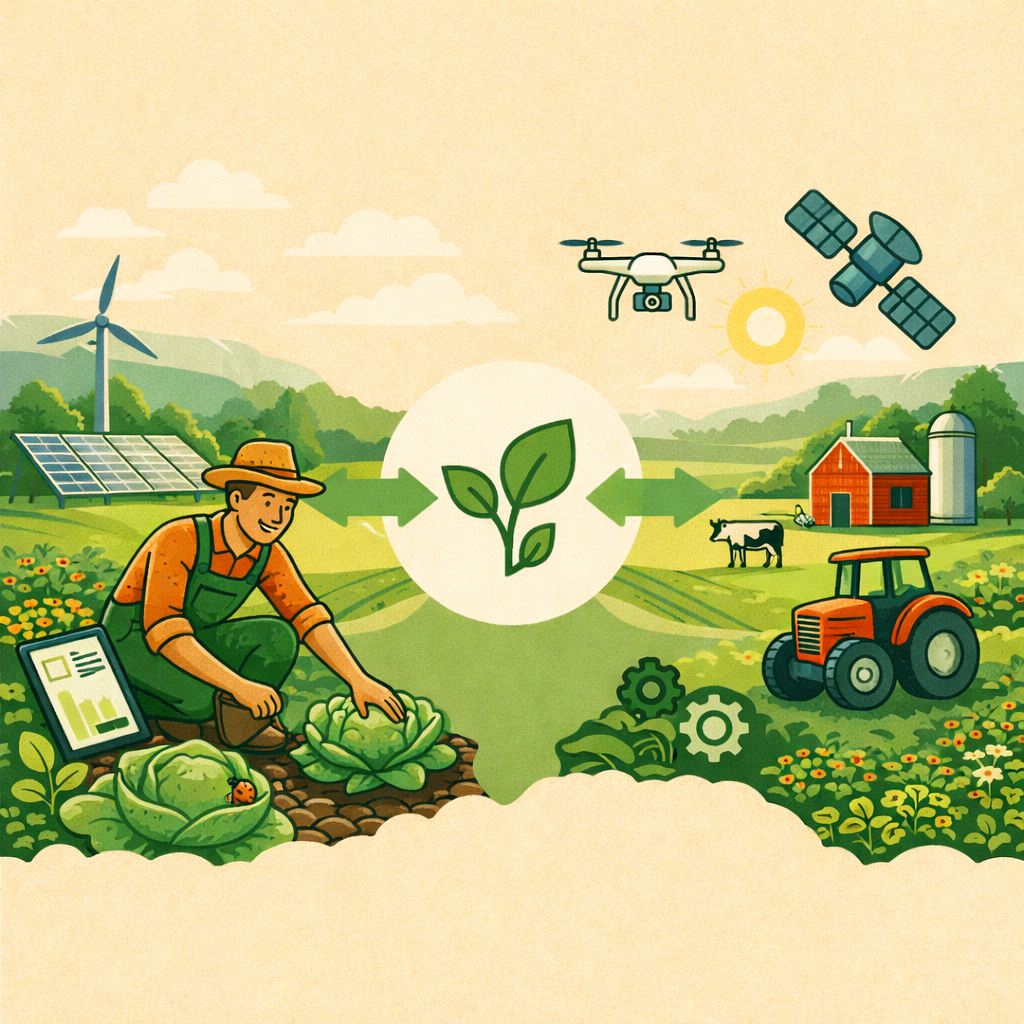
Sustainable farming systems are more resilient. Healthy soils store carbon and retain moisture. Efficient irrigation reduces vulnerability to droughts. Biodiverse landscapes are better equipped to withstand pests and climate shocks. Together, these elements help farmers adapt to changing conditions while maintaining stable production.
At the same time, sustainability has a strong socio-economic dimension. Farmers need viable incomes, access to modern tools, and skills that allow them to remain competitive. Consumers increasingly expect food to be produced responsibly. Rural communities depend on agriculture that can provide long-term employment and economic stability.
This is where education and innovation become critical. The Green Deal cannot succeed through policy alone—it requires people who understand how to apply sustainable practices in real agricultural contexts. ReGrow supports this transition by strengthening agricultural education and training, ensuring that future professionals are equipped with the knowledge, digital skills, and practical understanding needed to implement Green Deal principles on the ground.
Ultimately, the Green Deal matters because it reshapes agriculture not only as a productive sector, but as a foundation for environmental protection, economic resilience, and social well-being.