Farming has always relied on experience, observation, and local knowledge. These traditions remain invaluable. However, today’s agricultural challenges – climate volatility, rising input costs, labor shortages, and environmental constraints – require additional tools to support decision-making and efficiency.
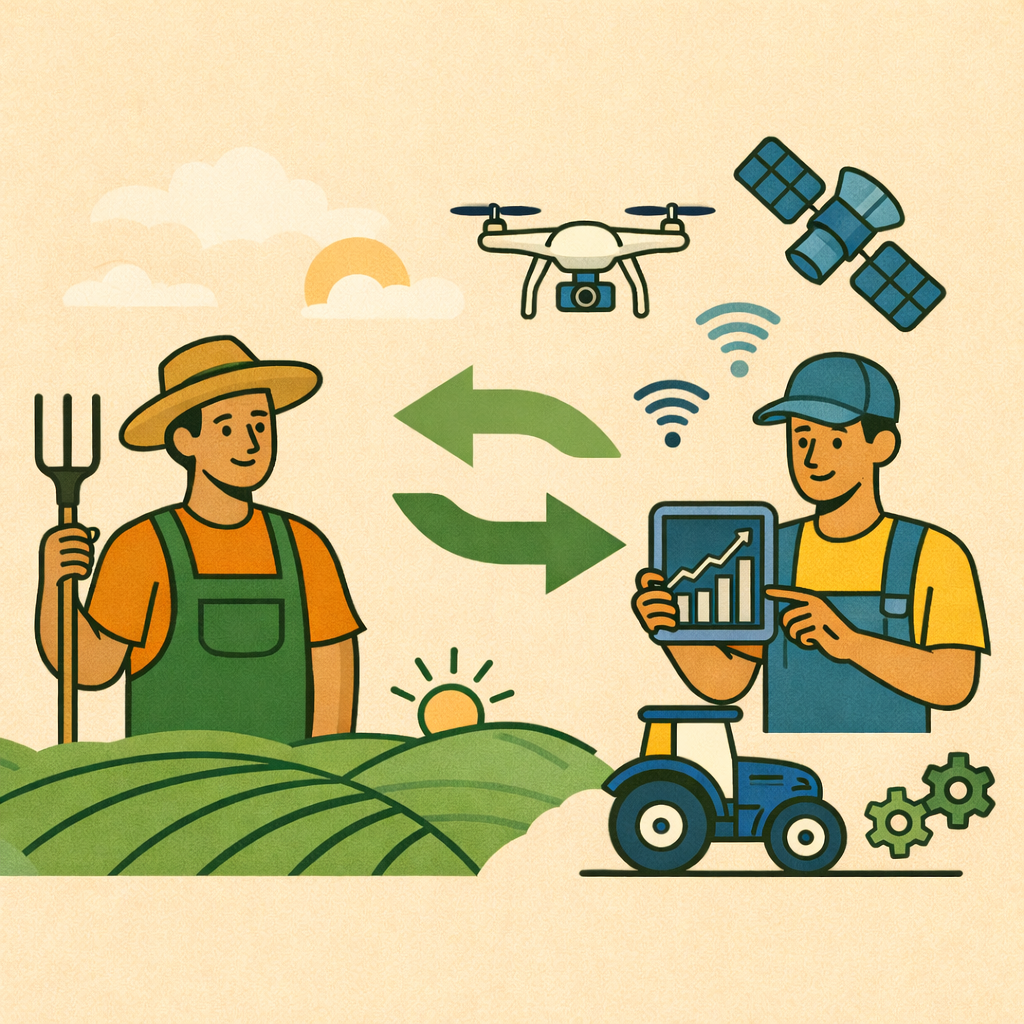
The future of agriculture lies in bridging tradition and technology.
Modern farming increasingly uses digital solutions to complement traditional practices. Precision agriculture tools allow farmers to monitor crops, soils, and environmental conditions in real time. This data-driven approach supports better decisions about irrigation, fertilization, pest management, and harvesting – reducing waste while increasing productivity.
Technology also helps farmers respond to uncertainty. Climate variability makes farming more unpredictable than ever. Digital monitoring systems and predictive analytics help anticipate risks, enabling farmers to act earlier and reduce losses. Automation and smart systems further support efficiency, especially where labor availability is limited.
Yet technology alone does not create change. Its effectiveness depends on people who know how to interpret data, adapt tools to local conditions, and integrate innovation into daily farm operations. This is why education plays such a central role in shaping the future of farming.
ReGrow focuses on preparing agricultural professionals who are comfortable working at the intersection of sustainability, digital innovation, and practical farming realities. By modernizing learning pathways and promoting technology-enabled education, the project supports a new generation of specialists who can translate innovation into meaningful impact.
Importantly, the future of farming is not about replacing farmers with machines. It is about empowering farmers – giving them tools that enhance their expertise, protect natural resources, and strengthen long-term viability.
When tradition and technology work together, agriculture becomes more resilient, more efficient, and better prepared for the challenges ahead.